SKU: 2995964680
ice plant jade rock price

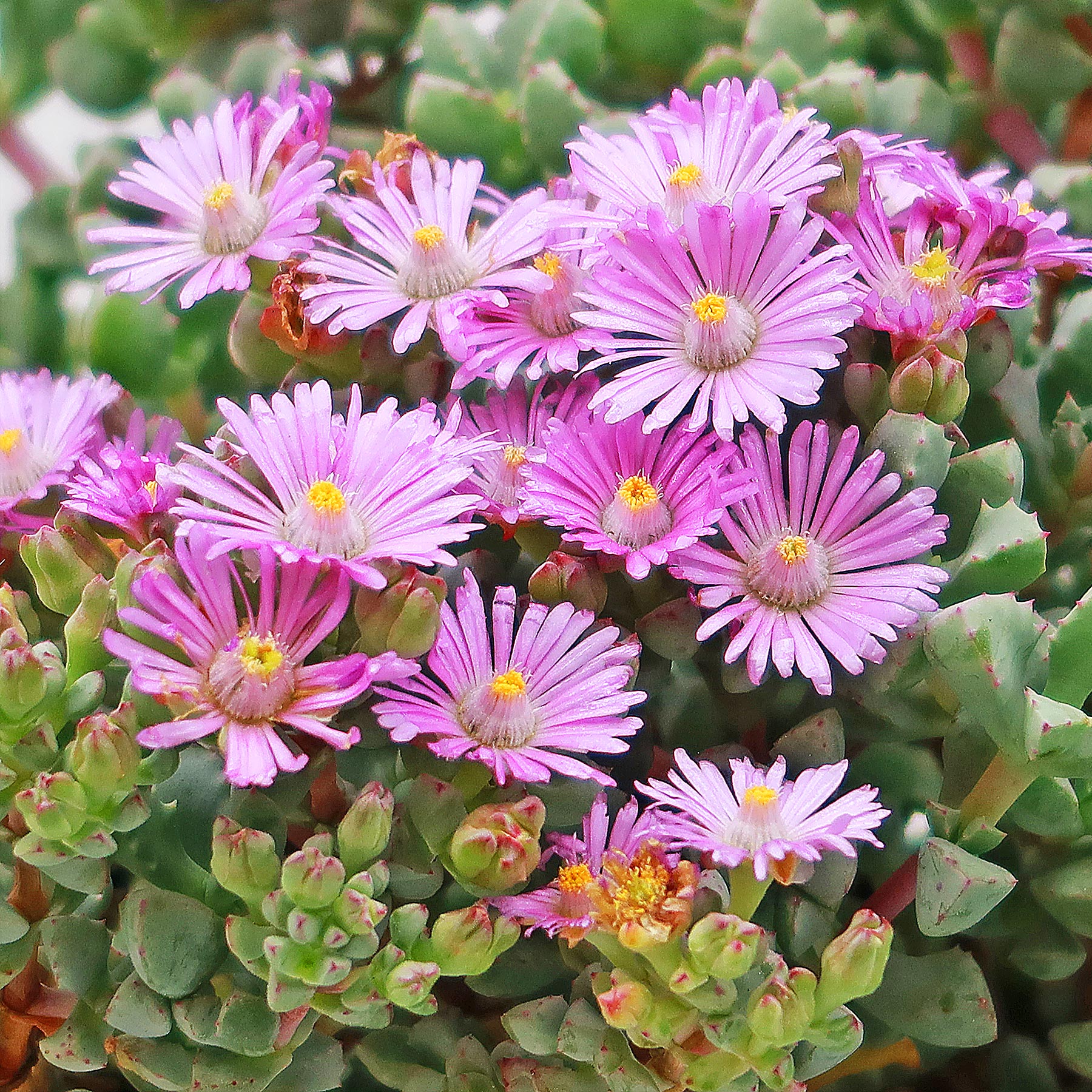
ice plant jade rock price Pink Ice plant Succulent 'Oscularia deltoides' 3 Gal

Sale price$24.62 Regular price$27.35
Save 10%

Pay in installments of $6.84 with ShopPay, AfterPay and Klarna

Shipping Estimate
USA
  • USA
  • CAN

Ships within 48 hours · Estimated delivery Oct 23 - Oct 28

Promo Codes Available:

For Your Every Summer RSVP, with Code: SUMMER15

Description

ice plant jade rock price Pink Ice plant Succulent 'Oscularia deltoides' 3 GalIntroducing the Pink ice plant, known as Oscularia deltoides, which is a trailing succulent with pink flowers. Native to South Africa, this low maintenance succulent makes great ground cover and spreads out, forming a colorful mat, and grows well on the rocky edge. Additionally, this pink ice plant can be grown in pots too. The name "ice plant" refers to tiny hairs on the plant's leaves and stems that reflect light in the same way that ice crystals

Introducing the Pink ice plant, known as Oscularia deltoides, which is a trailing succulent with pink flowers. Native to South Africa, this low-maintenance succulent makes great ground cover and spreads out, forming a colorful mat, and grows well on the rocky edge. Additionally, this pink ice plant can be grown in pots too.

The name "ice plant" refers to tiny hairs on the plant's leaves and stems that reflect light in the same way that ice crystals do. The foliage is fleshy and succulent-like, and it darkens as fall temperatures drop. Although ice plants are cold-sensitive, many varieties are evergreen in warm, dry climates.

Ice plants are used in sunny but sheltered desert gardens, rock gardens, slopes, ground cover, and as edging plants.

It is also known as Lampranthus Deltoides, Deltoid Leaved Dew Plant, Tooth-leaf Rock Vygie, Dassievygie, and Sandsteenvygie.

With its small, plump leaves that boast a mesmerizing blue-green hue, this ice plant is sure to turn heads and add drama to any space.

The three-sided leaves of the ice plant are fat and trailing.  The color becomes more intense as the pink ice plant ages and is exposed to more sunlight. It can grow up to 1 foot tall and 2 feet wide.

The ice plant flowers bloom during the late spring to summer, with bright pinkish-purple and dazzling magenta-pink flowers. They bloom from every nook and cranny until they completely surround and cover the whole plant. This stunning ground covered with pink flowers is closed up in the morning but open, often to cover the plant, in the afternoon. 

The true beauty of this trailing plant is that it can withstand high temperatures and extreme environmental conditions without showing signs of stress.  It attracts butterflies.

Leaf cuttings and stem cuttings are the easiest way to propagate these ice plant ground cover. 

When and How to Water Your Ice Plant 

The ice plant is a succulent that prefers well-draining soil and requires watering only when the soil is dry to the touch. Overwatering can cause root rot and other issues that can damage these pink plants. They can be watered year-round and water regularly from spring to Autumn but reduce the watering frequency in winter; the growth period is early Spring to late Summer. 

When watering the pink ice plant, it is important to avoid standing water and to ensure that the soil is able to dry out between watering sessions. The pink ice plant is well-suited to dry climates and can tolerate periods of drought, but it does require a lot of water to thrive. 

Remember, watering should be done at the base of the succulent ice plant rather than from above to avoid getting water on the leaves, which can cause damage or rot. With proper watering and care, the pink ice plant can thrive and produce colorful blooms that are sure to brighten up any garden. 

Light Requirements - Where to Put Ice Plant

Like many other succulents, the ice plant is sun-loving and also requires direct, bright light to thrive.  When grown indoors, place it in the sunniest place in your house. It is ideal to grow this pink flower ground cover in a west- or south-facing window, when it can get 4-6 hours of bright sunlight. 

For outdoor cultivation, these oscularia deltoides require full sun to partial shade for at least 6-8 hours of strong light each day. Although light shade in the afternoon is often preferable - especially in hotter climates where the plant might become stressed by the intense heat of the afternoon sun. It's crucial to place your pink plants away from any areas with constant direct sunlight, as doing so could result in burned foliage. 

Remember, when planting the pink ice plant, it is important to choose a location that receives full sun throughout the day to maintain its colors. It is well-suited to hot and dry climates and can tolerate high temperatures and intense sunlight. 

This pink ice is able to tolerate some shade, but it may not produce as many blooms in areas with less sunlight or in too much shade. With proper light and care, the pink ice plant can thrive and produce beautiful blooms that are sure to add color and interest to any garden or landscape. 

Optimal Soil & Fertilizer Needs 

The ice plant favors very airy, sandy soil that drains well. Planting them in ordinary soil will result in compacted roots, stunted growth, and, most likely, root rot. Instead, make or buy a well-draining potting mix, or ideally, use our specialized potting mix that contains 5 natural substrates and mycorrhizae to promote the development of a strong root system that helps your succulent to thrive. 

When it comes to fertilizer, the pink ice plant does not require a lot of additional nutrients. In fact, too much fertilizer can cause the plant to produce excessive foliage at the expense of blooms. A slow-release natural fertilizer with an equal mix of NPK (5-10-5) can be applied once a year in the spring to help provide the plant with the nutrients it needs to thrive. Care should be taken to avoid over-fertilizing the succulent plant, as this can lead to issues with growth and blooming. 

With proper soil and fertilizer, the ice flower plant can thrive and produce beautiful blooms that are sure to add color and interest to any garden or landscape. 

Hardiness Zones & More 

When growing indoors, it should be kept between 65-75 degrees Fahrenheit to ensure optimal growth. The requirements are fairly flexible, as it can tolerate a wide range of temperatures. However, it is best to keep it in a warm environment with plenty of sunlight to encourage healthy growth.

For outdoor cultivation, this hardy ice plant is suitable outdoors in USDA zones 8-11, making oscularia deltoidesa a versatile plant that can be grown in a variety of climates. However, it is important to ensure that the succulent plants receive enough water to prevent issues with dehydration. 

The ice plant is able to tolerate mild frost, but it may struggle in areas with prolonged periods of frost or freezing temperatures.  The best way to grow these pink ground covers is in containers, especially for those who live in regions with harsh winters.  

When it's cold outside, or there is a chance of snow or frost, you can then bring them inside. There are ways to keep your pink ice plant succulent safe from the cold if you are unable to bring it inside. To help them endure the harsh winter, you can use frost cloths or tiny greenhouses. 

Final Thoughts

Overall, the Pink Ice plant Succulent (Oscularia deltoides) is a beautiful and low-maintenance plant that adds a pop of color to any garden or indoor space. With its unique triangular-shaped leaves and ability to thrive in dry conditions, it is an excellent choice for beginner gardeners or those looking to add a touch of vibrancy to their collection. Remember to provide well-draining soil, ample sunlight, and occasional watering to keep this succulent happy and healthy.

Be sure to add Oscularia deltoides - Pink ice plant, to your collection today and elevate the beauty of your home or garden with this stunning-looking plant.

Shipping Notes
  • Free Standard Shipping on $100+ Orders to the USA.
  • Except Preorder products are shipped in 48 hours.
  • Delivery to the USA:
  1. Standard Shipping : 3-10 business days
  • If time is of the essence, please consider selecting expedited delivery for faster service.
Exchange/Return Notes
  • We offer a 30-day return/exchange service after receiving.
  • Final sale items are not eligible for returns or exchanges.
  • To process your return/exchange, please contact us at [email protected]
  • Please click here for more details>>> Return & Exchange Policy
SKU: 2995964680

Discover Niche Categories That Outsell ice plant jade rock price

Top-Converting Item to Boost Your Average Order

4.8 ★★★★★
Based on 29 reviews
Sort
Highest Rating
Newest First
Oldest First
Product Reviews
C
Verified Purchase
Craig in NE CT
Lexington, US
★★★★★ 5
Great story!
Format: Mass Market Paperback
I read this book as a teenager, in the 1960s, and just, now, finished rereading it, at age 65. I see that I missed many of the author's ideas (due to my youthful lusts, antics, and ignorance of life and of the Bible). "Stranger in a Strange Land" struggles with boundaries of self, morality, and what may constitute/govern a normal healthy society. The author pokes at our spiritual needs, ideas, or rituals upon which we all depend to order our lives, whether we be atheistic, pantheistic, or monotheistic. By minimizing God and godhood to the level of individual understanding and growth, the Heinlein's story posits that all philosophical views need not be antagonistic toward one another; that, by default, truth is and should be relative, given our potentially reformed natural self-interests. Whether a `religious' or irreligious person or organization is primitive, civilized, or `who-cares', Heinlein poses that, despite our ideologies that distinguish us from others, or unite us, only a growing constructive self-awareness is really important, not whether God really exists or whether we will face a final judgment. The author's trick to redemption is how we decide to get along with ourselves and our neighbors, within a `fly right, or mess up and go back to the beginning' scenario, in contrast to the biblical one-life-one-chance view. By design or default, in this story, Heinlein relegates God below human self-actualization, and allows no room for absolute truth. Heinlein's self-fulfilling self-actualization is entirely at odds with biblical Christianity and biblical Judaism, yet quite at home with most religions and faiths that rely on salvation by personal works, and reincarnation-based religions. Maybe that was part of the author's point in telling the story. When it comes to putting a halt to abusive powers, I have to chuckle at how Heinlein has Smith frustrate the overbearing powers-that-be. A thought struck me about twenty years ago that those who have power or understanding have a God-given responsibility to exercise discipline and restraint with those who lack power or understanding. Having more power or understanding than someone or something else does not obviate one's responsibility to exercise that power or understanding to better the world in which we live, nor does it entitle one to do ought but to treat others with love, respect, and decency, which, for the betterment of society and our world, may require that one's power or understanding be exercised to identify or destroy evil. Though this philosophy is exercised by the lead character within the story, the clarity of this comes late to Valentine Michael Smith, yet, sadly, such clarity does not move him to embrace an absolute God, absolute truth, nor his own existence as a created being that is not God, leaving Heinlein's view of life and after-life harshly in contrast to the biblical viewpoint, hence at odds with God. Martian or human, in the end, Heinlein simply does a shell game with his characters, when the issue of death arises, leaving readers to guess in what level the author will eventually hide them, to avoid a final judgment, leaving each soul's story to continue ad infinitum, ad nauseam, without any ultimate accountability. This is an entertaining science fiction story, yet, Heinlein's ideas, in this sexual-religious-social romp, border on theological sophistry. His ideas will probably offend most established points of view. Despite his general bravado, and so bold a topic, Heinlein omits balanced discussion among the characters, fails to deal with any absolute truth or true final judgment of evil, and perfunctorily dismisses biblical views that might be germane to cogent biblical discussion. There are two upwelling truths that the author has twisted and cheapened them considerably, by his denial of absolute truth and avoiding our accountability to God's perfect righteousness. Those are self-sacrificing love and the inevitability that every soul is responsible for her/his own thoughts and actions. Though he allows watered down versions of those traditional moral elements to remain, Heinlein (who must have seen too many money-hungry medicine shows, tent meetings, and carnival acts) relies solely on human constructive self-awareness, self-discipline, and self-empowerment to pose a stab at a positive future for humanity and the afterlife. The story's quasi-moral might read, "Find any way to beat the present system and exploit it at almost any cost, so long as no one really gets hurt." Smith's earthly end-game of self-sacrifice is a corrupted shadow of Christ's. Smith's is a twisted image of self-sacrifice, a huckster's trick to work the crowd, avoiding entirely the biblical God and plan of Christ. Heinlein's bootstrap theology, in the end, can neither respect nor agree upon one God, nor save itself from its own moral meanderings and wishful unthinking of human sin. As an author, myself, I would add that every one of our actions, gestures, and our written or spoken utterances, has its consequences, and that we are ultimately responsible, to God, for everything that we generate and utter. I believe that Heinlein's story agrees partly with my belief, except that Heinlein leaves the one true God completely out of his story. Despite Heinlein's philosophical thrust that everyone can claim "Thou art God", for self or others, I personally subscribe to the biblical view that all things and people are created by God, and that He holds us together by His Laws and will, and that there is, yet, a separation that He reserves between us and Him, that can only be bridged or reconciled through His Christ, and, furthermore, that we are the only part of His Creation that has been offered that exclusive plan of redemption. By contrast, Heinlein's story offers the carrot of constructive self-awareness as the means of possible redemption for humanity, insecurely hoping to save us from ourselves. Craig M. Szwed (Author, photographer, combat veteran, father, composer)
WAS THIS REVIEW HELPFUL?YesReportShare
Reviewed in the United States on May 18, 2013
M
Verified Purchase
M. Estopinal
Boise, US
★★★★★ 5
A True Arthurian Legend
Format: Mass Market Paperback
The Once and Future King provides an excellent perspective into the world of Arthur, the King of England. This book is divided into four sections, each dealing with the different aspects of Arthur's life, including both the good and the bad. The first book, the Sword and the Stone, has been immortalized by countless movies, such as the one by Disney. This book deals with the upbringing of Arthur, or in this case, Wart, his childhood nickname. Here we see the trials Wart must face as he learns about the many forms of leadership, courtesy of his mentor, Merlyn. The second book, the Queen of Air and Darkness, is a prelude to the collapse of Arthur's kingdom. The result of this book begins to brew throughout the entire novel, finally impacting at the end of the final book. The third book, the Ill-Made Knight, is my personal favorite. This book is about Lancelot's personal quest to become the best knight in the world. This book is filled with exciting quests that Lancelot has taken up, including such things as saving a maiden from a boiling pot of water, as well as the ill-fated quest to find the Holy Grail. The fourth and final book, the Candle in the Wind, deals with the collapse of Arthur's kingdom. Arthur's sins "come home to roost" in this book, forcing him to make decisions that could jeopardize the safety of his wife, Guenever, and his best friend, Lancelot. This novel is truly one of the classic fantasy books that one reads and never forgets. Although there are many portrayals of the Arthurian legend, this is without a doubt one of the better ones.
WAS THIS REVIEW HELPFUL?YesReportShare
Reviewed in the United States on September 6, 2004
A
Verified Purchase
Amazon Customer
Boise, US
★★★★★ 5
A novel about all of life
I've read this novel (and listened to the excellent audio book narrated by Neville Jason) in all its different versions over several decades and every time come away with fresh admiration not only for White's fantastic prose style but also for his insight into all aspects of human character and the workings of society. I cannot over-emphasise how rich it all is. For those who have only read The Sword in the Stone (or seen the Disney version), it is important not to write this volume off as a children's story. Each of the four or five books that make up The Once and Future King reflects a different stage in life and experience. The greatness and the tragedy of the story is something we fully recognise only as we grow older. All of the books are wonderful, but The Ill-Made Knight (the third) is an education in adulthood. The background of the entire work from individually-published volumes is a little messy. The Kindle edition I have seems to match the Harper Voyager paperback complete edition which has the integrated four-book version (with the geese and ants integrated into The Sword in the Stone, and Madam Mim removed) and The Book of Merlyn added at the end without any changes to fix the resulting duplication. This is the form in which I am most familiar with all the parts. The Neville Jason audio book available through Audible is synchronised with the Kindle book but actually includes a different version of The Sword in the Stone (Madam Mim included). When I first listened to this, it frustrated me, because the sections on the geese and ants seem so essential. However, taking it all in its entirety, it works very well and avoids the duplication that otherwise occurs. Neville Jason's reading is of the highest quality, with clearly recognisable voices for all characters.
WAS THIS REVIEW HELPFUL?YesReportShare
Reviewed in the United States on April 14, 2014
D
Verified Purchase
Dick Forney
Lake Worth, US
★★★★★ 4
Excellent Though Quite Different Than I Expected
I lover the old Disney film version of Sword in the Stone, so I finally got around to reading the book. I love the first where it is a whimsical children’s tale. I expected a different feel as it went on and it does, just not quite what I thought it would be. I found it amusing that it is written as an almost companion to Mallory. Take that for what you will, but it is quite enjoyable.
WAS THIS REVIEW HELPFUL?YesReportShare
Reviewed in the United States on April 7, 2026
L
Verified Purchase
lee thomas
Dallas, US
★★★★★ 5
A classic
Format: Mass Market Paperback
The Once and Future King is a saga I didn't want to end. There's enough in it to read it again, and again. The paperback squeezes 4 books into a volume you can carry in a purse, but unless you're traveling, I would recommend buying the books separately, with illustrations.
WAS THIS REVIEW HELPFUL?YesReportShare
Reviewed in the United States on May 9, 2026

recommand products